
SAS fellowship provides undergraduates 10 weeks of research experience
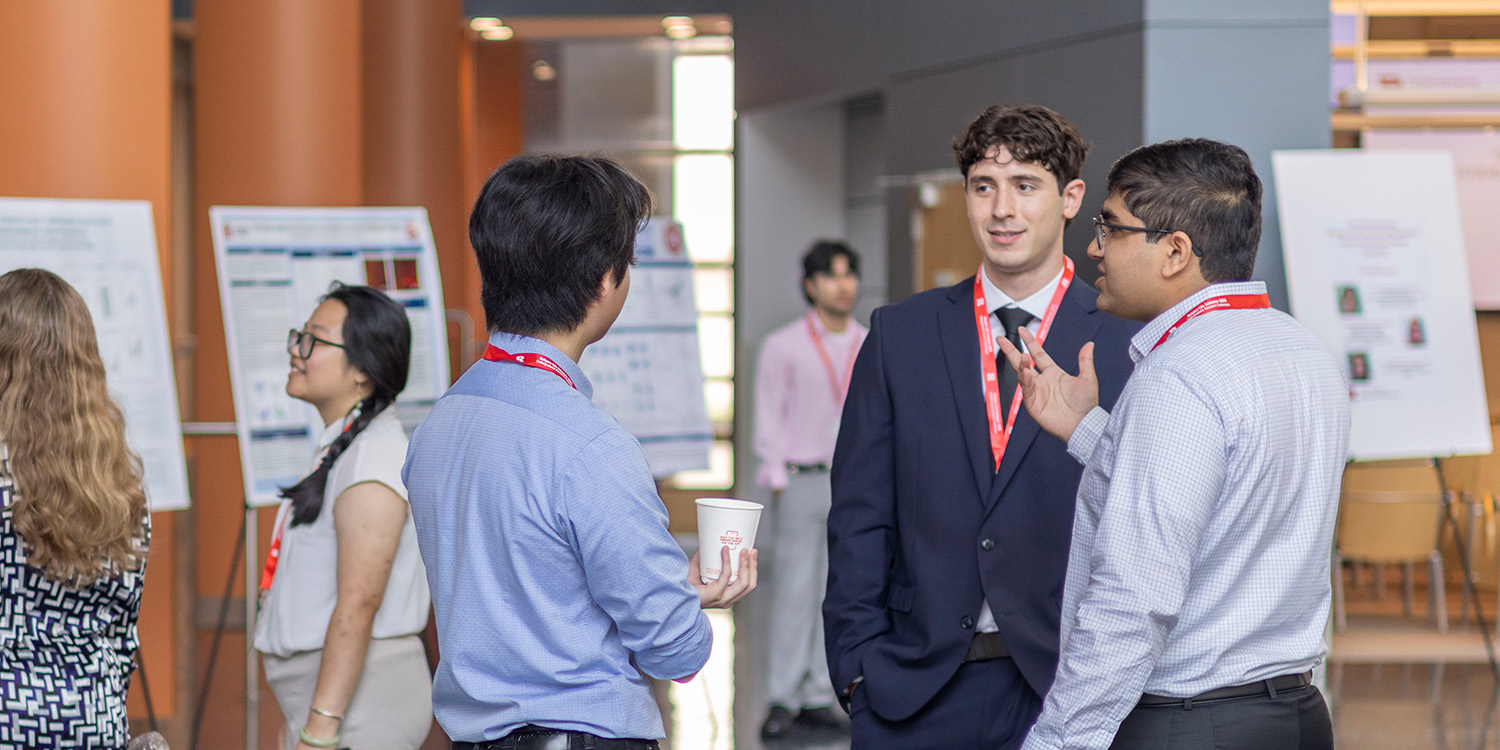 A symposium marked 20 years of the DSL-SURF fellowship program that offers undergrads summer research gigs with Rutgers research teams.
Rutgers junior Anika Mehta found the perfect place to spend her summer: Inside a campus research lab studying the intestines of mice.
"I wanted to learn what it means to do research," says Mehta, a genetics and genomics major in the School of Arts and Sciences. "I have great mentors in this lab, and I wanted to work full-time under them and actually learn what they do every day."
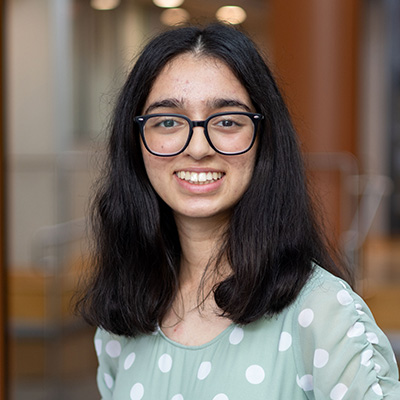 Anika MehtaAderinola Adegoke also spent her summer in a lab, studying cell growth in fruit flies.
"I felt like I didn't have enough time to fully explore my research during the semester," said Adegoke, a junior majoring in cell biology and neuroscience in SAS. "I wanted to dedicate this entire summer to research. And this program offered an amazing chance to do that."
Adegoke and Mehta were among 31 undergraduates who participated in an endowed fellowship program through the SAS Division of Life Sciences (DLS) that allowed them to spend 10 weeks in a Rutgers University–New Brunswick science lab conducting their own independent research projects alongside graduate students, post-docs, and professors.
 Aderinola AdegokeFor undergraduates navigating credit-intensive majors, the DLS's Summer Undergraduate Research Fellowship Program, or DLS-SURF, provides a welcome opportunity to pursue research during the relatively less-harried months of summer.
“From fall to spring our scholars are balancing multiple commitments—coursework, student organizations, and their research” says Anne Carr-Schmid, a DLS faculty member who serves as coordinator for DLS-SURF program. “Summer is the time they can really focus in on research, so it's important for us to support their commitment.”
The program also pays a stipend to students, easing the need to find a summer job.
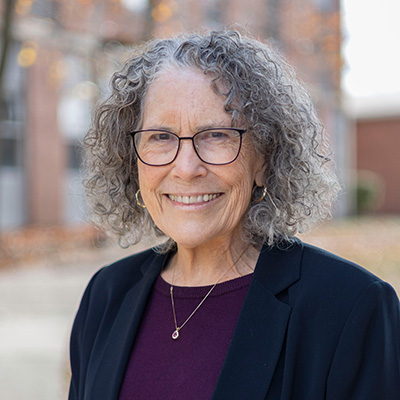 Lori CoveyAt a recent symposium that celebrated the fellowship’s 20th anniversary, DLS Dean Lori Covey harked back to her own undergraduate years to explain why summer research opportunities are so important for aspiring scientists.
"I did research only during the school year because I needed to make money in the summer to cover some of my college expenses,” Covey told students, faculty and alumni gathered in the Life Sciences Atrium. “My summer jobs (were) really difficult and exhausting and a huge distraction from what I wanted to be doing, which was working in a lab."
Students face similar issues today, she said. Since DLS-SURF’s inception in 2006, the number of annual participants has doubled. And, beyond the immediate benefits it brings to undergraduates’ academic experience, the program’s impact endures well beyond the summer.
“These young scholars will move into many different professions, and they’ll take with them the understanding of the importance of life science research,” Covey said. “When someone in power asks: ‘what’s the benefit of research in fish, worms, flies, mice?” They’ll be able to answer that question.
“They'll know that curing disease (happens) by understanding all the different developmental processes that can go awry.”
This year's fellows tackled some of the most serious and confounding of human health issues.
Mehta, for example, worked in the lab of Michael Verzi, a genetics professor whose research focuses on illnesses such as Inflammatory Bowel Disease and colorectal cancer.
“We're trying to figure out how the intestine repairs itself after it's been injured,” Mehta said about research. ""We want to understand how injury changes cell behavior and activates regenerative pathways.”
We want to understand how cells essentially activate a repair program.”
 Tariq AliSenior Tariq Ali worked in Covey’s lab, which focuses on immunology, the study of the body’s defense system against disease. Some of the cellular pathways he analyzed over the summer are associated with rare immune deficiency disorders, such as Hyper IgM.
“A better understanding of this pathway could help lead to a better understanding of those kinds of diseases, potentially developing therapies for it,” Ali said.
Beyond the lab experience, students said doing research helped them grow in other areas of their lives.
“You have to dedicate yourself to this one specific thing, which has helped me in other parts of my life,” said Lua Nammalvar, a junior working in the lab of Sam Gu, a professor of molecular biology and biochemistry. “Doing research has helped me explore things that I've always wanted to do but felt like I wasn't good enough at the time or was too distracted.”
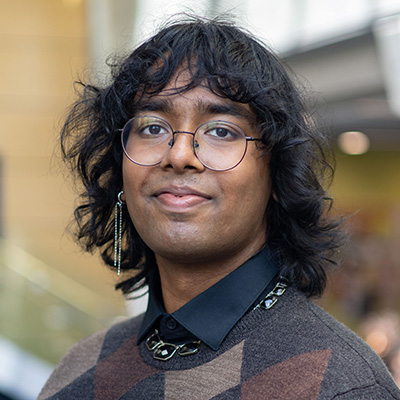 Lua NammalvarTo mark the 20th anniversary, three alumni—including two former DLS-SURF fellows—shared their experiences with students at the symposium, providing advice and encouragement as they discussed their journey from undergraduate researcher to career scientist. Current student and DLS-SURF fellow Rayhan Ahmad assisted in the selection.
Juhi Farooqui, a post-doctoral researcher at the University of Pennsylvania who explores ethical issues connected with new technologies, told students to take the opportunity to explore different directions.
“It turns out that when you try things, you figure out that there might be a much bigger reward than you realized in a different path,” Farooqui, a 2017 graduate, told students. “So, my advice is to explore."
Julie Bianchini, a 2010 graduate, told students how she found her calling in the research and development divisions of personal care companies. She is now an assistant vice president at L’Oreal.
“I work in beauty, which is super fun,” she said. “And it's a way to connect with people in a very real way.”
A third alumnus was already well known to students and faculty. Maureen Barr, a 1990 graduate, is a Distinguished Professor of Genetics at Rutgers and nationally recognized for her research with tiny worms that has led to discoveries about cilia, and their connection to disease.
Barr concluded her talk by displaying a slide laden with names that account for about half of the Rutgers undergraduates who have worked in her lab and have gone on to graduate programs and careers in the health sciences.
“And this is going to be you,” Barr told students. “Whether or not you know where you're going to wind up, you're going to do something amazing.”
The DLS-SURF program is funded through the Duncan and Nancy MacMillan Endowed Scholarship for Research in the Life Sciences. The program receives additional funding from the departments of Cell Biology and Neuroscience, Genetics, Molecular Biology and Biochemistry, and the DLS Office of Undergraduate Instruction. Fellows supported through the Human Genetics Institute of New Jersey MacMillan Cancer Genetics Summer Undergraduate Research Fellowship (HGI-SURF) also participate in the DLS SURF summer program.
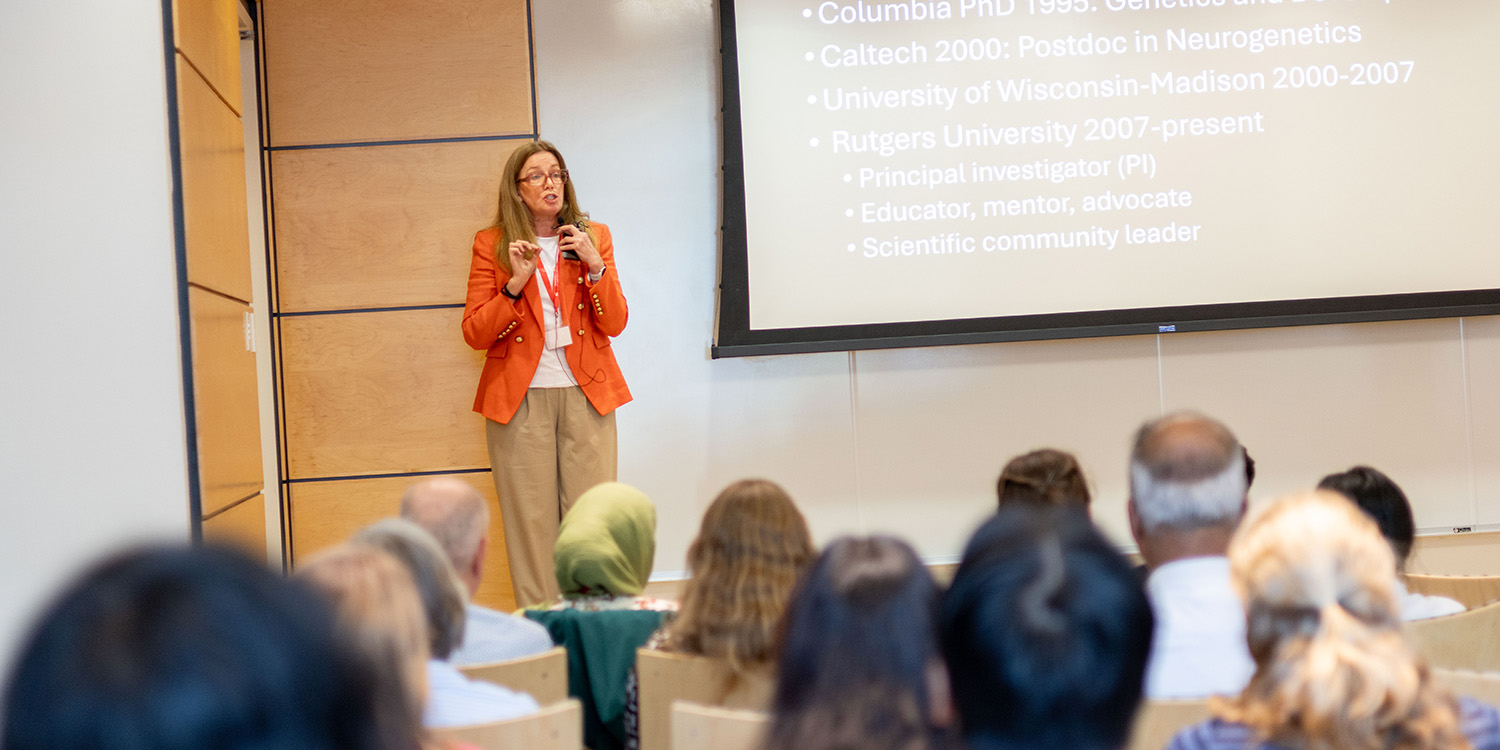 "You're going to do something amazing," Rutgers Professor Maureen Barr told undergraduate students pursuing the life sciences.